

A practical guide for companies that want to record consumables cleanly, control stock levels more effectively, and avoid stock shortages.
To manage warehouse consumables digitally is a decisive step towards greater transparency in day-to-day warehouse operations for many companies. Anyone still organising screws, wall plugs, gloves, cleaning agents, or other consumables via Excel, paper lists, or verbal communication quickly loses track of stock levels, withdrawals, and reorders.
Companies that manage warehouse consumables digitally reduce search times, avoid stock shortages, and create a better basis for stocktaking and replenishment.
Digital consumables management should not make the warehouse more complicated, but simpler. The goal is a clear process that allows stock levels to be recorded quickly, withdrawals to be documented cleanly, and reorders to be triggered on time.
Why consumables are often difficult to control
In many companies, the problem is not purchasing, but a lack of transparency in day-to-day operations. Materials are withdrawn but not posted, storage locations are inconsistent, and only during stocktaking does it become clear what is actually available.
Especially with consumables, small discrepancies add up quickly. When several employees regularly access the same stock, shrinkage, shortages, and unnecessary repeat purchases arise almost automatically without fixed processes.
Another issue is that consumables are often stored in several places: in the main warehouse, workshop areas, vehicles, or secondary storage rooms. Without digital stock control, there is no complete overview, even when enough material is available across the company.
What data should be recorded digitally
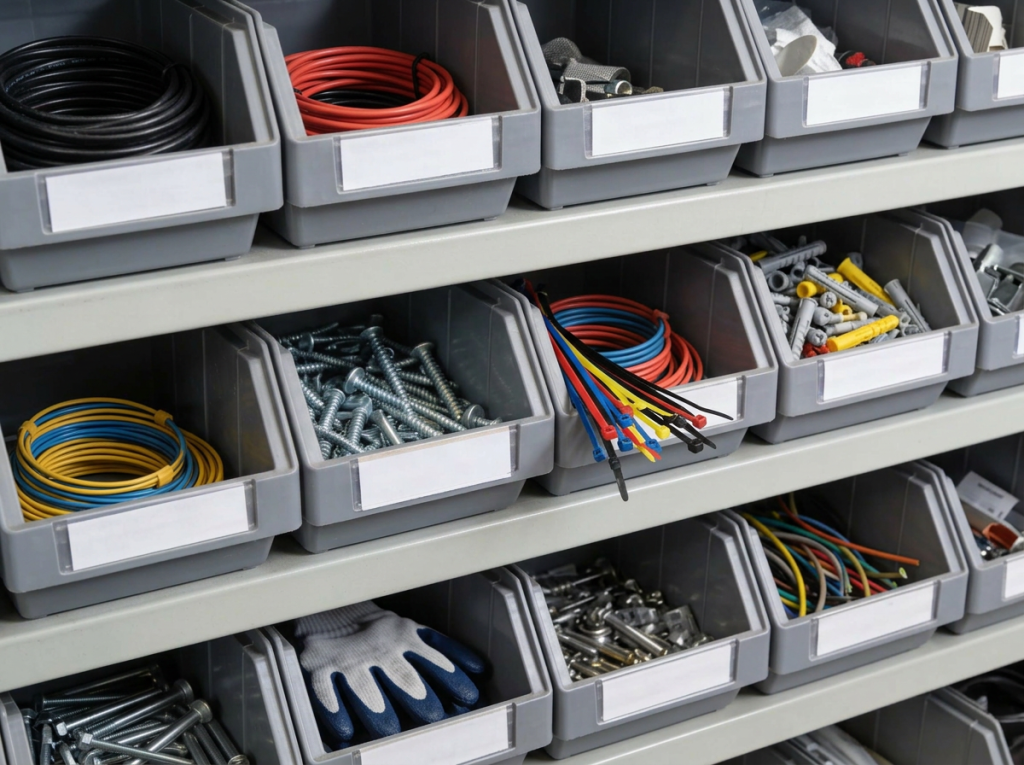
Anyone who wants to manage consumables digitally should store more than just an item name. In practice, the minimum useful data includes item number, description, storage location, current quantity, unit of measure, and minimum stock level.
Depending on the material, additional information may be relevant, such as variant, batch, supplier, or internal cost centre. Structures like these are essential for professional warehouse processes because they improve stock control and traceability.
Most importantly, the data must be easy to maintain in day-to-day work. A system is only useful if postings can be completed quickly and without unnecessary detours.
How to introduce digital consumables management
The best way to get started is not by reorganising the entire warehouse at once. It is far more effective to begin with a clearly defined area, such as C-parts, workshop materials, PPE, or cleaning supplies.
Here is a practical step-by-step approach:
- Create all relevant consumables with a clear description and item number.
- Define fixed storage locations for shelves, boxes, rooms, or vehicles.
- Set minimum stock levels so reorders are not triggered only when stock reaches zero.
- Link the items to barcodes or labels.
- Post incoming goods, withdrawals, and stock transfers consistently in digital form.
- Review the most frequently used items regularly and adjust reorder levels where needed.
This is exactly where a digital warehouse solution shows its strength, because movements can be recorded directly where they happen. That makes stock levels more reliable and processes much easier to manage.
How digital processes simplify everyday warehouse work
As soon as stock movements are recorded consistently in digital form, the error rate usually drops noticeably. Employees can see more quickly where an item is located, how much is available, and when replenishment is needed.
This saves time in daily operations and improves planning at the same time. For companies with material warehouses in trade and industry, this is especially valuable because it makes stock items, stocktaking, transfers, and stock control much easier to manage.
Stocktaking also becomes easier when items, storage locations, and quantities are already structured properly. Instead of having to update information afterwards, a reliable stock base develops step by step during ongoing operations.
Common mistakes with consumables in the warehouse
One common mistake is documenting only incoming goods properly while allowing withdrawals to continue informally. In that case, the stock figures in the system are only correct on paper.
Duplicate item records, unclear responsibilities, and missing minimum stock levels are just as problematic. Anyone who wants to manage warehouse consumables digitally does not need complicated theory, but simple rules that actually work in practice.
When software becomes worthwhile
A digital solution usually becomes worthwhile earlier than many companies expect. As soon as several people access the same stock, regular reordering is required, or stocktaking takes too much time, measurable friction already exists.
Software becomes especially useful when materials are stored in several locations or used on the move. In those cases, a central stock overview delivers value very quickly.
Conclusion
Anyone who wants to manage warehouse consumables digitally needs clear item master data, fixed storage locations, and simple posting processes above all. Once these foundations are in place, stock shortages can be reduced, search times shortened, and replenishment managed much more effectively.
For companies working with stock items in trade and industry, this is a practical starting point for more transparency. Scanwiz provides the right use cases and functions for stock control, stocktaking, storage locations, and material warehouses.
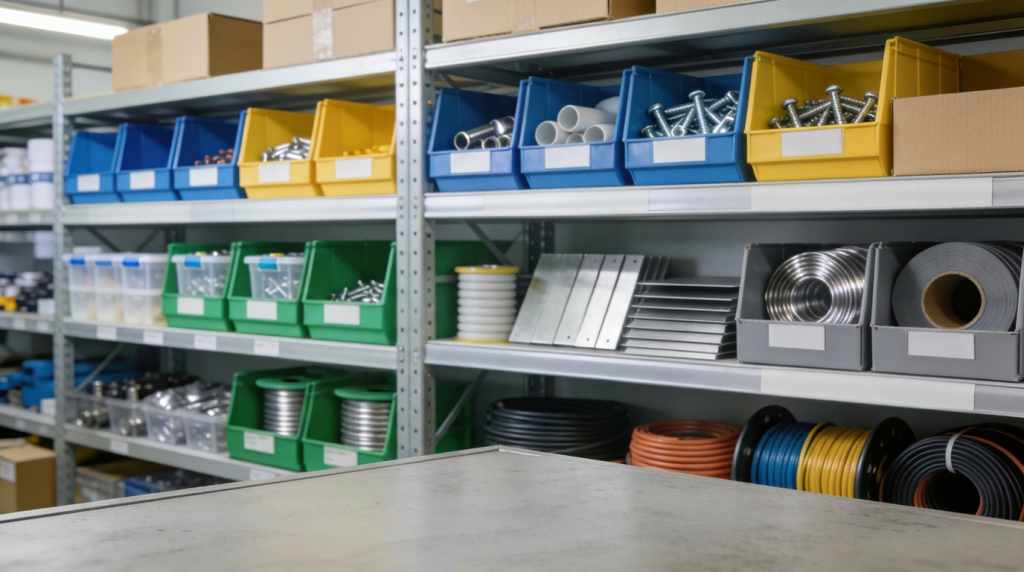
Anyone who wants to manage consumables digitally should not think about software first, but about process clarity. When items are structured properly, storage locations are defined, and postings are simple enough, even an unstructured side warehouse can become a controllable stock environment.
With a solution like Scanwiz, this process can be mapped much more efficiently because recording, scanning, stock control, and stocktaking are brought together in one digital workflow. Customer rating: 4.9 out of 5 stars based on 113 customer reviews.