
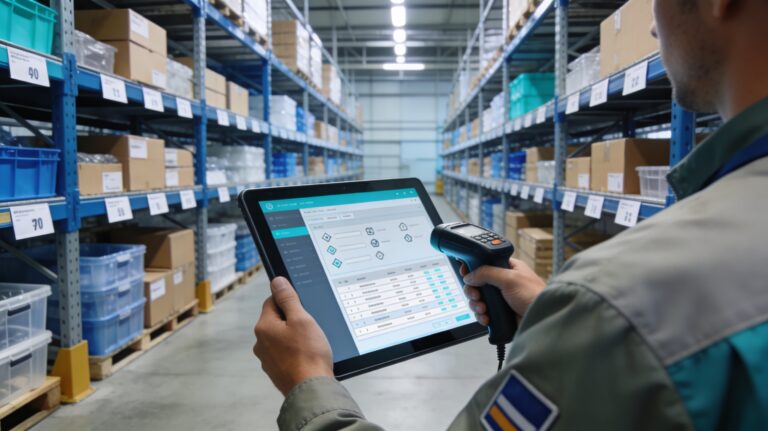
Item-level inventory management is the targeted planning, organization, and control of every single item in the warehouse – with the goal of always knowing which item is stored in which quantity at which storage location and how it moves. It forms the operational foundation for reliable delivery capability, lean stock levels, and lower warehousing costs.
Definition of item-level inventory management
Item-level inventory management is the part of warehouse management that focuses specifically on individual items (SKUs) – their master data, stock levels, storage locations, and movements. It includes the systematic recording, updating, and control of this information, often supported by specialized software solutions.
Typical core tasks are:
- Maintaining article master data (number, description, unit, minimum stock level).
- Assigning items to storage locations, racks, bins, and zones.
- Recording goods receipt, internal transfers, goods issue, and stocktakes.
Day-to-day tasks in item-level inventory management
In day-to-day operations, item-level inventory management can be divided into several process steps.
- Goods receipt: Recording and checking delivered items in terms of quantity and quality, followed by stock posting.
- Put-away: Assigning optimal storage locations according to access frequency, size, hazardous goods, or temperature requirements.
- Inventory control: Continuous updating of available, reserved, and blocked stock levels in real time.
- Picking and shipping: Providing the right items in the right quantity at the right time, including goods issue posting.
- Replenishment and planning: Monitoring minimum stock levels and triggering purchase orders before shortages occur.
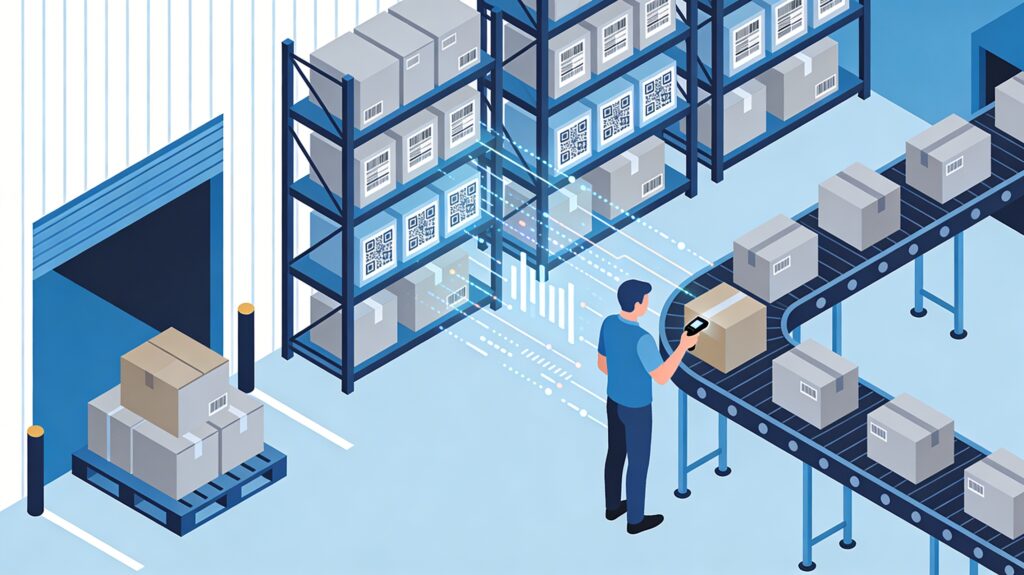
Why good item-level inventory management matters
Professional item-level inventory management reduces stockouts, excess inventory, and picking errors, and therefore has a direct impact on service level and margin. At the same time, search times in the warehouse decrease, which increases employee productivity and shortens throughput times.
Key benefits include:
- Better delivery performance and fewer “not available” situations.
- Lower capital tie-up thanks to optimized stock levels.
- Less shrinkage, mix-ups, and inventory discrepancies thanks to clean data.
The role of software like scanwiz.com
In modern companies, warehouse management software handles most of the operational item-level inventory management. It supports inventory control, manages stock movements, and links warehouse data with purchasing, sales, and logistics processes.
A specialized solution like scanwiz.com focuses on simple, mobile management of warehouse items via scanners and smartphones, eliminating media breaks and paper lists. Small and mid-sized businesses in particular benefit from such systems, because they can quickly gain transparency over every item and every storage location without a complex ERP system.