
Glossary · Stocktaking
What is shrinkage?
Material that is simply gone – without anyone recording a withdrawal. Shrinkage usually only shows up at the stocktake, and by then the cause is hard to find. Here you will learn what types exist, how to measure it and what really helps against it.
In brief
Shrinkage is the difference between the stock that should be there according to the records and the stock that is actually there, when it is not explained by recorded withdrawals. Causes include spoilage and expiry, breakage, theft, but also unrecorded withdrawals and recording errors. Shrinkage usually only becomes visible at the stocktake.
Shrinkage: definition
Shrinkage is the most unpleasant form of stock discrepancy: something is missing and nobody knows why. It is important to distinguish between two types:
Real shrinkage
The material is actually lost: spoiled, expired, broken, stolen or left behind somewhere. The value is gone.
Apparent shrinkage
The material was used or sold, but not recorded – or recorded under the wrong item. The consumption was real; only the number in the system is wrong.
In most businesses, apparent shrinkage is bigger than you think. The good news: the main remedy is a simpler recording process.
Types and causes of shrinkage
| Type | Examples | Typical in |
|---|---|---|
| Spoilage and expiry | Expired medicines, dried-out paint, hardened adhesive | Medical practice, painting business, workshop |
| Natural shrinkage | Evaporation, weight loss, offcuts | Liquids, bulk goods, panels |
| Breakage and damage | Tiles, glass, parts damaged in transport | Construction, interior finishing, logistics |
| Theft | Tools, batteries, copper, high-value small material | Construction sites, open stores |
| Unrecorded withdrawal | “I just grabbed it quickly” | Everywhere |
| Mix-ups and recording errors | Wrong item, wrong unit, transposed digits | Similar items, paper processes |
Calculating the shrinkage rate
Formula
Shrinkage rate = shrinkage in € ÷ consumption in € × 100
- Shrinkage
- Unexplained shortage, valued at cost
- Consumption
- Recorded material consumption in the same period – in retail, sales instead
Ideally, calculate the rate per item group. One percent shrinkage on screws is something different from one percent on batteries.
Example: consumables at a medical practice
Material worth €28,000 was used during the year. At the stocktake, goods worth €1,400 are missing, with no record for them.
- Shrinkage rate: 1,400 ÷ 28,000 × 100
5.0% - Of which expired and disposed of, not written off
€900 - Of which taken, but never recorded
€300 - Unexplained
€200
The biggest item is expiry: new stock was put at the front of the shelf, older packs expired at the back. The practice switches to FEFO, reduces stock of rarely used items and has withdrawals scanned right at the cabinet. Target for next year: below 1.5%.
What helps against shrinkage
Make recording easy
- Withdrawal by scan right at the shelf
- No paper slip, no entering it later
Clarify responsibility
- Assign tools to people
- Document issue and return
Counting more often also helps: if you check expensive items monthly, you find the cause while someone still remembers. For tools and equipment specifically, we have put together all measures in the guide Prevent tool loss.
Check the shortage per item
With the calculator you can check for a single item how large the shortage is in units, euros and percent, and whether it is above your tolerance. Pre-filled: first-aid dressings, 80 according to the system, 71 counted.
The calculator needs JavaScript. Please enable JavaScript in your browser.
4 typical mistakes around shrinkage
- Immediately thinking of theft. Usually it is missing records or expiry. Blanket suspicion poisons the atmosphere and does not solve the problem.
- Simply writing off shrinkage. Without a breakdown, the same loss repeats every year.
- Only looking once a year. After twelve months, it is almost impossible to work out what happened.
- Making recording complicated. The more cumbersome it is to record a withdrawal, the more often it gets skipped.
Containing shrinkage with Scanwiz
In Scanwiz every withdrawal is recorded by scan – in seconds, even without signal. You assign tools and equipment to people, vehicles or sites, and handovers can be signed. From the Growth plan, you manage batches with expiry dates so nothing expires unnoticed. And with cycle counts or spot checks, you check critical items in between.
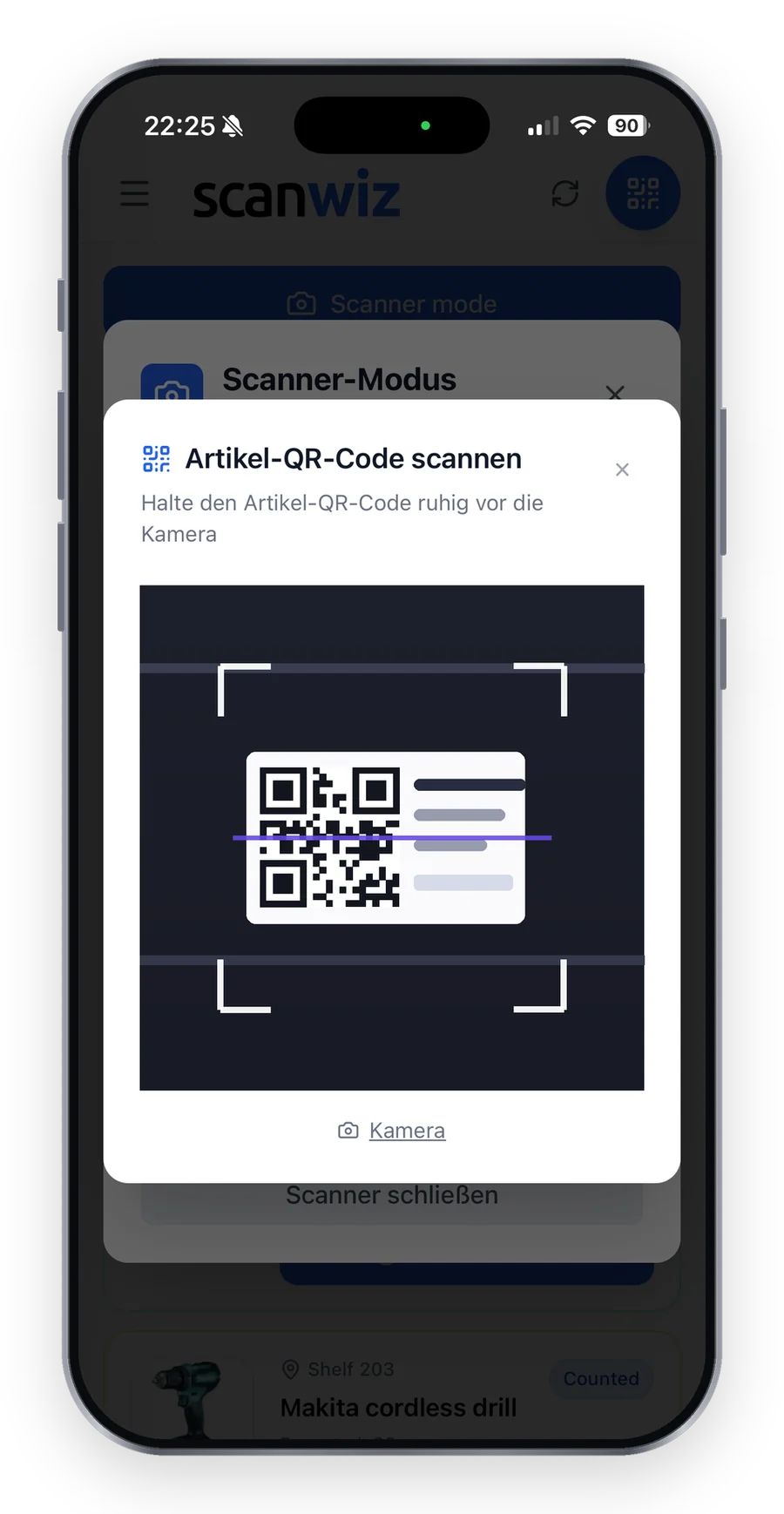
- Withdrawals by scan, even offline
- Assignment to people, vehicles and sites
- Batches with expiry dates from Growth
- Spot checks for critical items
Frequently asked questions about shrinkage
What is shrinkage in the warehouse?
Shrinkage is a shortage that is not explained by recorded withdrawals. Causes include spoilage, expiry, breakage, theft, but also unrecorded withdrawals and recording errors.
What is the difference between real and apparent shrinkage?
With real shrinkage, the goods are actually lost. With apparent shrinkage, they were used or sold but not recorded, or recorded incorrectly.
How do you calculate the shrinkage rate?
Shrinkage in euros divided by consumption or sales in the same period, times 100. The rate per item group is the most meaningful.
What helps most against shrinkage?
A recording process so simple that it does not get skipped, for example by scanning at the shelf. Plus FEFO picking against expiry, clear responsibilities for tools and regular partial counts.
Sources & methodology
- Wikipedia: Shrinkage (accounting) – spoilage, loss and breakage. en.wikipedia.org, accessed 10 November 2026.
- Worked example: Scanwiz’s own calculation with realistic figures from a medical practice.
Updated November 2026 · Scanwiz editorial team
Over 250 customers already trust Scanwiz
From the glossary to your warehouse – Scanwiz does the rest.
Minimum stock, stocktakes, inspection intervals and batches run automatically in Scanwiz as part of your daily work. Try it free for 14 days with your whole team – no credit card required. Or let us show you everything in a personal demo.


